Stainless Steel Guide: Types, Surface Finishes, and Applications
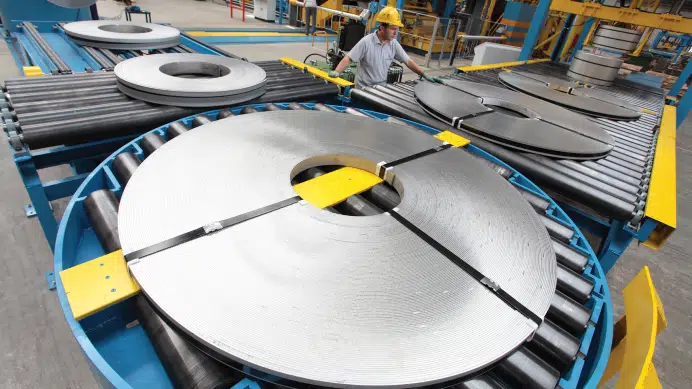
Stainless steel is one of the most versatile engineering materials in modern industry, thanks to its corrosion resistance, mechanical properties, range of surface finishes, and long service life. From food and beverage production to architecture, automotive and energy systems, chemical processing, and healthcare technologies, it offers solutions for a wide range of industry requirements.
However, stainless steel does not refer to a single material or grade. It encompasses a broad family of materials with different alloy compositions, microstructures, surface characteristics, and processing methods. This guide brings together the main stainless steel types, commonly used grades, surface finishes, processing methods, and applications.
What Is Stainless Steel and Why Is It Used?
The fundamental definition of stainless steel and the mechanism behind its corrosion resistance are explained in “What Is Stainless Steel?” This guide focuses on material types, grades, surface finishes, and processing methods.
Related content:
Sarıtaş Stainless Steel Products
What Are the Types of Stainless Steel?
What Are the Different Types of Stainless Steel?
Austenitic Stainless Steels
This family includes widely used grades such as 304, 304L, 316, and 316L. Their good corrosion resistance, formability, and weldability make them suitable for food processing equipment, architectural applications, and a range of industrial uses.
Ferritic Stainless Steels
This family includes grades such as 430. Their chromium-based composition and typically low nickel content make them suitable for consideration in household appliances, decorative surfaces, and selected automotive components.
Martensitic Stainless Steels
These grades can achieve high hardness and strength through appropriate heat treatment. They can be used in cutting tools, mechanical parts, and applications requiring wear resistance.
Duplex Stainless Steels
Duplex stainless steels combine the characteristics of austenitic and ferritic microstructures. They can be considered for applications requiring high mechanical strength and strong corrosion resistance in certain aggressive environments.
Related content:
Types of Stainless Steel
Common Stainless Steel Grades: 304, 316, and 430
| Grade | Key Properties | Typical Applications |
| 304 / 304L | Good general corrosion resistance and formability | Food processing, architecture, industrial equipment |
| 316 / 316L | Enhanced resistance in certain chloride-containing environments due to molybdenum | Chemical processing, process equipment, suitable marine applications |
| 430 | Ferritic structure and suitability for decorative finishes | Household appliances, interiors, decorative applications |
| Duplex grades | High strength and strong corrosion performance in certain environments | Energy, chemical processing, infrastructure, marine applications |
In certain chloride-containing environments, 316 can offer greater resistance to pitting and crevice corrosion than 304. However, it may not be sufficient for every marine environment. Grade selection should be based on actual service conditions.
Related content:
304, 316, and Other Stainless Steel Grades
What Are the Different Stainless Steel Surface Finishes?
Beyond appearance, surface characteristics can influence cleanability, surface roughness, maintenance requirements, and, under certain conditions, corrosion performance.
2B: A smooth, matte finish produced by cold rolling, annealing, pickling, and a light final rolling pass.
BA (Bright Annealed): A smooth, bright finish achieved by annealing in a controlled atmosphere.
No. 4: A mechanically ground finish with directional grain lines produced using abrasive sanding.
SB (Scotch-Brite): A mechanically finished surface with a uniform texture produced by abrasive brushing.
HL (Hairline): A decorative finish characterized by long, straight grain lines.
No. 8 Mirror Finish: A highly reflective surface polished to a mirror-like appearance.
Circle / Marble Polish: A decorative finish featuring circular or patterned polishing marks.
Related content:
Stainless Steel Surface Finishes
Surface Roughness (Ra)
Circle / Marble Polish Finishes
Stainless Steel Surface Coatings and Decorative Technologies
In addition to surface finishing, colored or clear anti-fingerprint coatings can be applied to stainless steel. Materials treated with these coatings can offer aesthetic benefits, improved hygiene, and ease of use across a range of industries.
Related content:
Color Coating Technology
How Is Stainless Steel Processed?
Stainless steel is commonly supplied in coil or sheet form. At service centers, it can be prepared to the dimensions and surface specifications required for customers’ manufacturing processes.
Slitting: Cutting wide coils lengthwise into strips of specified widths.
Cut-to-Length: Uncoiling material and cutting it into sheets of specified lengths.
Leveling: A process designed to improve material flatness.
Surface Finishing: Preparing the material to achieve the desired aesthetic and functional surface characteristics.
Protective Film Application: Applying protective film to suitable products to help protect the surface during transportation and subsequent processing.
Processing quality can influence manufacturing efficiency through dimensional tolerances, edge quality, flatness, and surface integrity.
Related content:
From Coil to Finished Product: The Journey of Stainless Steel
Cut-to-Length and Slitting Lines
Stainless Steel Service Center
Where Is Stainless Steel Used?
Food and beverage industry: Production equipment, tanks, piping systems, and hygienic processes.
Architecture and construction: Facades, elevators, railings, and decorative surfaces.
Automotive and transportation: Exhaust systems, mechanical components, and transportation equipment.
Chemical processing and energy: Process equipment, piping, and industrial components.
Healthcare and pharmaceuticals: Hygienic production systems and suitable medical applications.
Marine industry: Fasteners and auxiliary equipment made from suitable grades.
Renewable energy: Components for solar, wind, hydropower, geothermal, and selected hydrogen technology applications.
These are just some of the leading examples. With grades and surface finishes suited to different technical requirements, stainless steel is also used across many other industries and industrial applications.
Related content:
Hygienic Stainless Steel Applications in the Food and Healthcare Industries
Stainless Steel in the Defense Industry
The Importance of Stainless Steel in Strategic Industries
Why Can Stainless Steel Rust?
Stainless steel is not immune to corrosion under all conditions. Chlorides, unsuitable cleaning chemicals, free iron contamination, elevated temperatures, and certain design conditions can increase corrosion risk. Pitting, crevice corrosion, intergranular corrosion, and stress corrosion cracking may occur. Appropriate grade selection, surface treatment, design, and maintenance are important for managing these risks.
Related content:
Why Does Stainless Steel Rust?
Types of Stainless Steel Corrosion
What Is Stainless Steel Passivation and Why Is It Important?
Stainless Steel and Sustainability
Long service life, recyclability, and resource efficiency are important factors when assessing the sustainability of stainless steel. However, energy consumption, raw material sources, emissions, transportation, and impacts throughout the service life must also be considered from a lifecycle perspective.
Related content:
Stainless Steel for a Sustainable Future
Sarıtaş Sustainability
Why Is Selecting the Right Stainless Steel Important?
Grade designation or initial purchase cost alone is not enough to guide material selection. The operating environment, temperature, mechanical loads, corrosion conditions, welding and forming requirements, surface finish expectations, and service life should all be considered together. The right selection can support manufacturing efficiency and reduce the total cost of ownership.
Related content:
Selecting the Right Stainless Steel for Industrial Projects
The Right Stainless Steel Solutions with Sarıtaş
Realizing the full potential of stainless steel’s wide range of grades and surface finishes requires appropriate material selection and processing. Sarıtaş Stainless Steel combines a broad product portfolio, advanced processing technologies, and technical expertise to provide stainless steel solutions for the needs of diverse industries. Preparing material to the appropriate grade, dimensions, surface finish, and tolerances supports reliability and efficiency in customers’ manufacturing processes.
Because the true value of stainless steel lies in understanding its properties and translating them into the right industrial solutions.