What Is Stainless Steel? Properties, Types, and Applications
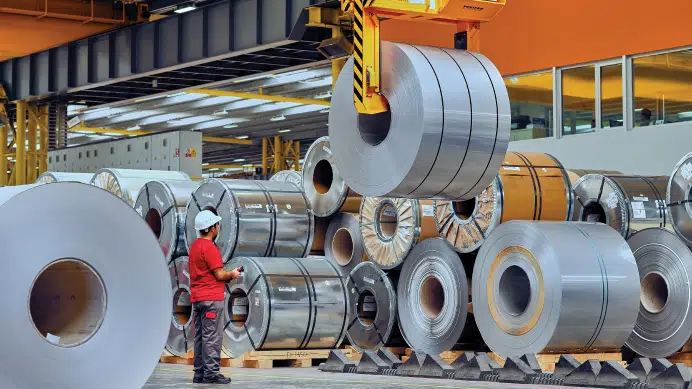
Stainless steel is one of the most important engineering materials in modern industry, thanks to its high corrosion resistance, durability, aesthetic surface finishes, and long service life. Its applications span a wide range of industries, from architecture and food production to automotive and energy systems, healthcare technologies, and chemical processing.
But what exactly is stainless steel, why is it resistant to rust, and what sets it apart from other types of steel?
What Is Stainless Steel?
Stainless steel is a family of iron-based alloys containing at least 10.5% chromium (Cr) by mass. Nickel, molybdenum, manganese, and other alloying elements can be added to tailor its properties to the requirements of different applications.
The defining characteristic of stainless steel is its ability to form an extremely thin, invisible, protective passive layer on its surface, thanks to its chromium content. Under suitable conditions, this chromium-rich oxide layer can naturally regenerate, enabling the material to resist corrosion in a wide range of environments.
However, stainless steel is not completely immune to corrosion under all conditions. Its corrosion resistance can vary depending on the grade, environmental conditions, chemical exposure, temperature, and surface condition.
What Are the Key Properties of Stainless Steel?
The properties that make stainless steel valuable across industries extend well beyond corrosion resistance.
Corrosion resistance: Its chromium-rich passive layer can support long-term performance in humid, outdoor, and various industrial environments.
Mechanical strength: Different grade families offer varying combinations of high strength, ductility, and formability, depending on the application.
Hygiene and cleanability: With the appropriate surface finish and design, stainless steel can be used in industries with stringent hygiene requirements, such as food processing, pharmaceuticals, and healthcare.
Surface versatility: Matte, brushed, satin, bright, and mirror finishes meet both functional and aesthetic requirements.
Long service life: With appropriate material selection and maintenance, stainless steel can help reduce replacement and maintenance requirements.
Recyclability: Stainless steel can be recycled while retaining its material properties, supporting a circular economy.
What Are the Different Types of Stainless Steel?
Stainless steels are classified into different families based on their microstructure and alloy composition.
These families include austenitic, ferritic, martensitic, and duplex stainless steels, each with distinct properties and service conditions. For detailed grade comparisons, see our Stainless Steel Guide.
Where Is Stainless Steel Used?
Stainless steel is a versatile material that meets the technical and aesthetic needs of a wide range of industries.
Stainless steel is widely used across industries, including food processing, architecture, automotive, chemical processing, energy, healthcare, and marine applications. Application examples and technical details are covered in our Stainless Steel Guide.
These sectors represent just a few of the major areas in which stainless steel is widely used. With grades and surface finishes suited to diverse technical requirements, stainless steel is also used across numerous other industries and industrial applications. As requirements vary by sector and application, the appropriate stainless steel grade should be selected based on the service environment and technical specifications.
What Is the Difference Between Stainless Steel and Carbon Steel?
One of the fundamental differences between the two materials is corrosion resistance.
Carbon steel can offer cost-effective, high-strength solutions for many applications. However, when exposed to moisture and oxygen, it generally requires paint, galvanizing, or other protective systems.
Stainless steel, by contrast, forms a natural passive layer thanks to its chromium content. In suitable applications, this property can help reduce maintenance requirements and extend service life.
Material selection should therefore consider not only the initial purchase price, but also the total cost of ownership and lifecycle performance.
How Do You Select the Right Stainless Steel Grade?
Operating conditions, corrosion risk, and required service life should be evaluated together when selecting a material. For a comparison of 304, 316, and other grades, see our Stainless Steel Guide.
The right material selection affects not only product quality, but also production efficiency and the long-term performance of an investment.
Creating Value in Stainless Steel Starts with the Right Material and Processing
The industrial value of stainless steel stems not only from its chemical composition, but also from selecting the right grade and applying precision processing methods.
Sarıtaş Stainless Steel combines a broad product portfolio, advanced processing technologies, and technical expertise to provide stainless steel solutions for the needs of diverse industries. Preparing material to the appropriate grade, dimensions, surface finish, and tolerances helps support efficiency and reliability in customers’ manufacturing processes.
Because when used in the right application, stainless steel is an engineering material that provides the foundation for durable, reliable, and sustainable industrial solutions.