Stainless Steel in the Defense Industry: A Reliable Material for Critical Applications
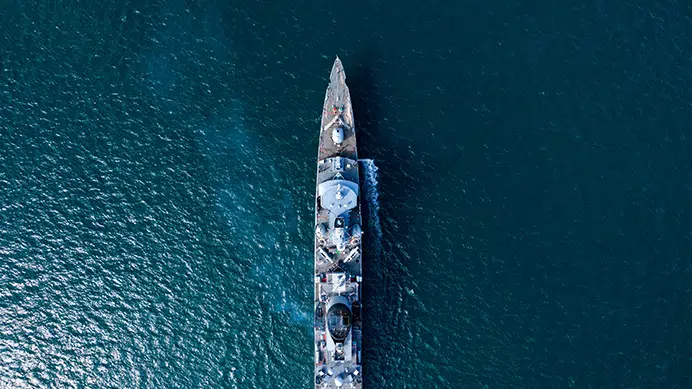
The defense industry is one of the most demanding sectors when it comes to material performance, reliability, and service life. Challenging environmental conditions, temperature fluctuations, humidity, saltwater exposure, chemical agents, and demanding mechanical loads make material selection more than a manufacturing decision—it becomes a fundamental part of engineering performance.
These requirements make stainless steel an important engineering material for a wide range of defense-related applications. Its high corrosion resistance, mechanical properties, processability, range of surface finishes, and long service life allow stainless steel to be considered across applications ranging from land, naval, and aerospace platforms to critical infrastructure and supporting systems.
Why Is Corrosion Resistance Critical in Demanding Environments?
Equipment and systems used in defense applications may be exposed to environmental conditions far beyond those encountered in conventional industrial settings. Chlorides in marine environments, high humidity, fluctuating temperatures, and prolonged outdoor exposure can significantly increase the risk of corrosion on metallic surfaces.
Thanks to its chromium content, stainless steel develops a thin, protective, and self-repairing passive layer on its surface, providing high corrosion resistance in many environments.
However, no single stainless steel grade is suitable for every defense application. The appropriate material should be selected according to the corrosiveness of the environment, operating temperature, mechanical loads, chemical exposure, and required service life. Depending on these conditions, 304, 316, Duplex, or more highly alloyed stainless steel grades may be considered.
Material Performance Across Naval, Land, and Aerospace Applications
The defense industry encompasses systems operating under widely different conditions. As a result, the advantages offered by stainless steel vary according to the specific application.
In marine and naval applications, corrosion resistance is particularly important. High chloride exposure from seawater and salt-laden atmospheres means that material selection, surface condition, and maintenance practices can directly influence long-term system performance.
For land platforms and defense infrastructure, mechanical performance, resistance to outdoor environments, manufacturability, and long service life may become key considerations. Stainless steel can be used in a variety of non-structural components, enclosures and protective elements, fastening systems, and supporting industrial equipment.
In aerospace applications, material selection becomes even more specialized. Parameters such as strength, temperature performance, corrosion resistance, fatigue behavior, and weight must be evaluated together. Stainless steels and other high-performance alloys are therefore selected only where their properties meet the relevant technical specifications and application requirements.
Selecting the Right Grade Is as Important as Mechanical Strength
High strength alone is not sufficient when selecting materials for demanding defense applications.
Properties such as yield strength, tensile strength, ductility, fatigue behavior, temperature performance, and corrosion resistance must be evaluated together with the actual service conditions.
Austenitic stainless steels, for example, can be selected for applications requiring a combination of formability, weldability, and corrosion resistance. Duplex stainless steels, meanwhile, can offer advantages in certain engineering applications where high mechanical strength and strong corrosion resistance are required together.
For critical applications, the key question is therefore not simply “How strong is the material?” but rather “How reliably can the material deliver the required performance under its intended service conditions?”
Why Do Precision Processing and Tolerances Matter?
Even high-quality stainless steel may not deliver its full performance potential unless it is supported by appropriate processing.
Thickness and width tolerances, flatness, edge quality, surface characteristics, and cutting precision can all influence downstream manufacturing processes and the quality of the final component.
This is where the role of a stainless steel service center becomes particularly important. Controlled processes such as slitting, cut-to-length processing, surface finishing, and protective film application help prepare material to meet the requirements of the customer’s manufacturing operations.
In industries where precision is critical, material quality and process quality cannot be considered separately.
Traceability and Quality Assurance
One of the key requirements within defense industry supply chains is the ability to verify a material’s identity and history.
Traceability through heat numbers, coil numbers, lot information, and relevant material certificates helps provide visibility into the material’s origin, grade information, and production history.
This approach is important not only for quality control, but also for supply chain reliability, compliance with technical specifications, and long-term quality management.
Long Service Life and a Lifecycle Approach
In critical industries, material cost cannot be evaluated solely on the basis of the initial purchase price. Maintenance requirements, potential performance losses caused by corrosion, replacement needs, and expected service life all contribute to total cost over time.
When the appropriate grade is selected and properly processed, stainless steel can offer significant lifecycle advantages through its high corrosion resistance, reduced maintenance requirements, and long service life.
These characteristics become particularly valuable in applications where maintenance access is difficult, operational continuity is important, or environmental conditions are especially demanding.
Reliable Materials and the Right Engineering Approach for Critical Applications
Reliability in the defense industry begins not only with the performance of the final system, but with the performance of every material and process behind it. To translate the inherent advantages of stainless steel into reliable real-world performance, the right grade, surface finish, tolerances, and processing technology must be considered as part of an integrated engineering approach.
Sarıtaş Stainless Steel combines a broad product portfolio, advanced processing technologies, a strong commitment to quality, and technical expertise to provide stainless steel solutions for high-performance applications across a range of industries. Preparing material with the appropriate grade and surface characteristics for its intended service conditions helps support reliable, consistent, and long-term performance throughout the industrial supply chain.
Because in critical applications, reliable performance begins when the right material meets the right engineering approach.