From Coil to Finished Product: The Journey of Stainless Steel
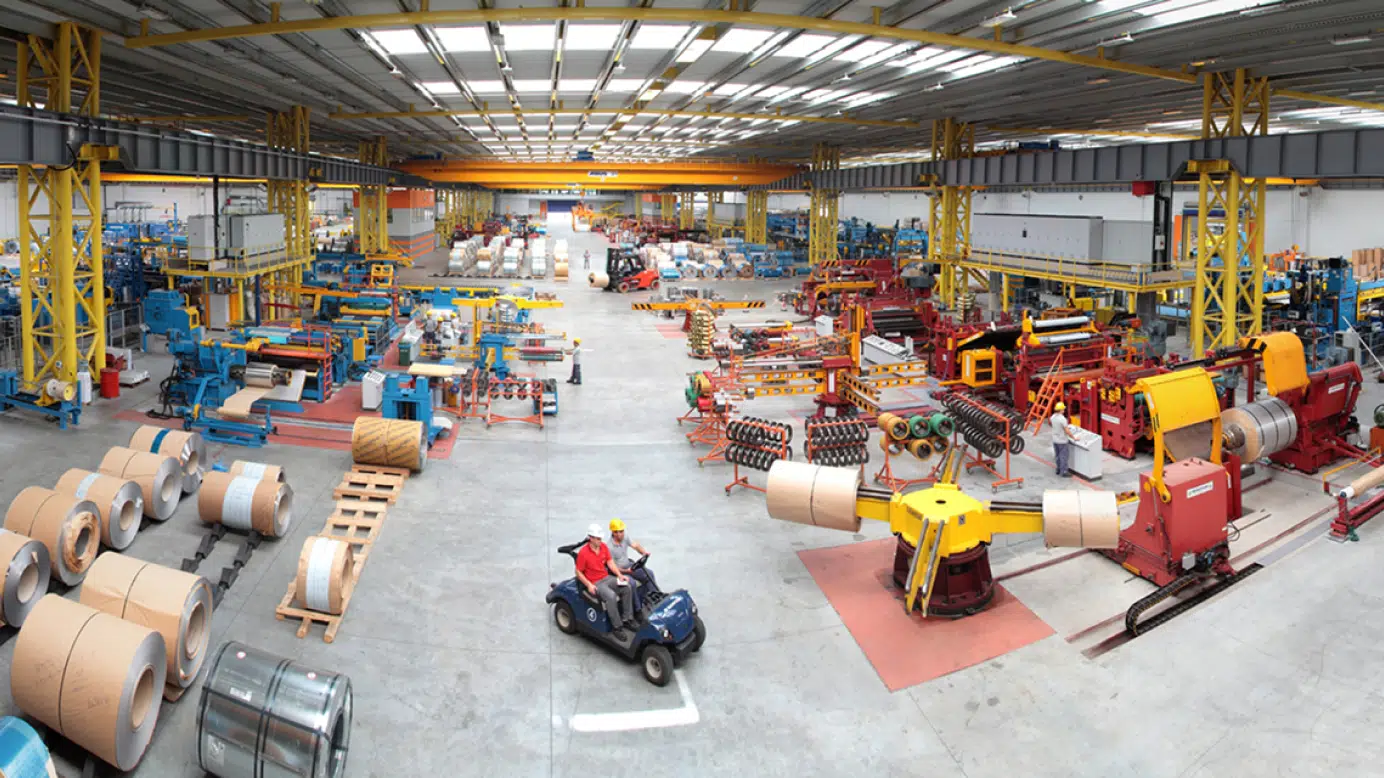
The journey of a stainless steel sheet, strip, or custom-sized product used in industry begins long before it reaches the customer’s manufacturing facility. Behind every finished product is a multi-stage process involving material selection, precision processing, surface protection, quality control, traceability, and secure logistics.
Produced by steel mills in large coils, stainless steel coil is processed according to the requirements of different industries and transformed into material with specified dimensions, thicknesses, surface finishes, and tolerances. In this transformation, stainless steel service centers play a critical role in bridging the gap between steel production and the final industrial application.
The Journey Begins with Selecting the Right Stainless Steel Coil
Every application places different demands on the material. The first step in the processing journey is therefore to identify the stainless steel grade and surface finish best suited to the intended application.
Grades such as 304, 316, 430, and Duplex offer different performance characteristics in terms of corrosion resistance, mechanical properties, formability, and suitability for specific service environments.
In addition to material grade, factors such as thickness, width, surface quality, dimensional tolerances, and end-use conditions play an important role in determining the appropriate downstream processing operations.
Slitting: From Wide Coils to Precision Strips
One of the key operations in stainless steel coil processing is slitting.
On a slitting line, wide master coils are cut longitudinally into narrower strips according to customer-specified dimensions. However, precision slitting involves much more than simply cutting steel to a required width.
Cutting accuracy, edge quality, width tolerances, rewinding quality, and surface protection throughout the process can all directly affect the quality and performance of the processed material.
Consistent dimensions are particularly important in industries such as automotive, household appliances, kitchen equipment, and precision manufacturing, where material consistency can contribute significantly to the efficiency and reliability of downstream production processes.
Cut-to-Length: Transforming Coil into Sheet
When an application requires flat sheets in specified dimensions rather than coil, cut-to-length processing becomes a key step.
The coil is unwound, leveled, and cut into specified lengths according to project requirements. During this process, the length of the sheet is only one of the critical parameters. Flatness, dimensional accuracy, and surface quality must also be carefully controlled.
Precision cut-to-length processing can help reduce the need for additional preparation at the customer’s facility while supporting greater efficiency in downstream manufacturing operations.
Surface Finishing: Combining Function and Aesthetics
Stainless steel stands out across many industries not only for its mechanical performance, but also for the versatility of its surface characteristics.
Depending on application requirements, stainless steel can be supplied in a range of surface finishes, including 2B, BA (Bright Annealed), No.4, SB (Scotch-Brite), HL (Hairline), and No.8 Mirror Finish. For architectural and decorative applications, specialized polishing and colored surface solutions can also become an integral part of the design.
Surface finish plays an important role in determining the final appearance of stainless steel used in architecture, elevators, household appliances, kitchen equipment, and decorative applications. At the same time, protecting the surface from scratches and contamination throughout processing is critical to preserving the required finish quality.
Where appropriate, protective film can be applied to help maintain surface quality throughout subsequent processing, handling, and fabrication stages.
Quality Control and Traceability
Quality control throughout the stainless steel journey is not limited to a final inspection. Checks performed at different stages—from incoming material through processing and preparation for shipment—help ensure that the finished product meets the required specifications.
Depending on the application, parameters such as grade, thickness, width, surface condition, dimensional tolerances, and processing quality can be monitored and verified.
At the same time, traceability through heat numbers, coil numbers, and lot information is an important element of the modern industrial supply chain, enabling material identity and production history to be tracked throughout the process.
Packaging: Protecting Quality All the Way to the Customer
Protecting the quality of precisely processed stainless steel during transportation and storage is also an integral part of the process.
Protective films, edge protection, appropriate support systems, and packaging methods selected according to product characteristics help protect the material against scratches, impact, moisture, and other external factors during handling, storage, and transportation.
Packaging should therefore be viewed as more than a logistics operation. It represents one of the final quality steps in ensuring that the product reaches the customer in the required condition.
From the Service Center to the Customer’s Production Line
Transforming a stainless steel coil into material tailored to a customer’s requirements depends on combining the right material with the right processing technology and effective process control.
When slitting, cut-to-length processing, surface finishing, quality control, traceability, and packaging work together as an integrated process, they can deliver significant advantages in terms of manufacturing efficiency, material utilization, and finished-product quality.
The role of a modern stainless steel service center therefore extends well beyond cutting or shaping material. Its real value lies in transforming a standard steel product into an application-specific solution that is ready for the customer’s manufacturing process.
Adding Value to Stainless Steel at Sarıtaş
Sarıtaş Stainless Steel combines a broad product portfolio with advanced processing technologies, surface solutions, quality control processes, and technical expertise to deliver stainless steel solutions tailored to the requirements of diverse industries.
Throughout the journey from coil to processed material, the objective is not simply to change the dimensions of the steel. It is to bring together the right grade, the right surface finish, and the right processing technology to meet the customer’s specific manufacturing requirements.
Because in stainless steel, value lies not only in the material itself, but also in how precisely it is processed, how effectively its quality is protected, and how well it is prepared for its final application.