What Is Stainless Steel Passivation and Why Is It Important?
One of the most important characteristics of stainless steel is its high corrosion resistance. At the heart of this performance is an extremely thin, invisible, and protective passive layer that forms when the chromium in stainless steel reacts with oxygen. Under suitable conditions, this layer can naturally regenerate, helping protect the stainless steel surface against environmental exposure.
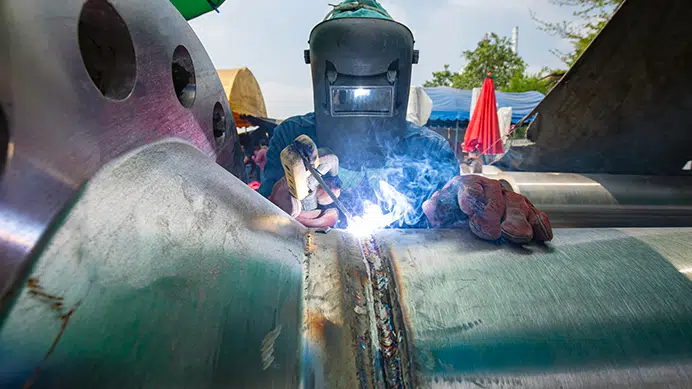
However, free iron particles and other contaminants introduced during manufacturing, cutting, welding, grinding, machining, or installation can adversely affect the corrosion performance of the surface. Passivation is a controlled chemical surface treatment applied to a properly cleaned stainless steel surface to promote and optimize its passive condition.
How Does Passivation Work?
The corrosion resistance of stainless steel originates from the chromium-rich passive film that forms naturally on its surface. Although extremely thin, this film acts as a protective barrier between the underlying metal and its environment.
One of the primary purposes of passivation is to remove free iron and other appropriate surface contaminants that may have been introduced during fabrication or handling, while promoting favorable conditions for the passive surface.
In practice, the stainless steel surface is first thoroughly cleaned to remove oils, dirt, and process residues. A passivation treatment is then applied according to the stainless steel grade, surface condition, and applicable technical requirements. Controlled nitric acid- or citric acid-based processes are commonly used for this purpose in industrial applications.
Chemical concentration, temperature, contact time, and rinsing conditions must all be carefully controlled. Passivation is therefore not simply a cleaning procedure; it is a technical surface treatment performed under defined process conditions.
Pickling and Passivation Are Not the Same Process
One of the most commonly misunderstood aspects of stainless steel surface treatment is the distinction between pickling and passivation.
Pickling is a more aggressive chemical surface treatment used primarily to remove heat tint, oxide scale, and certain surface contaminants that may result from welding or other high-temperature processes.
Passivation, by contrast, is intended to remove undesirable surface contaminants such as free iron from a clean stainless steel surface and promote the material’s naturally passive condition.
The two processes are therefore not interchangeable. Depending on the application requirements and the condition of the surface, passivation alone may be sufficient. In other cases, pickling may be required first, followed by an appropriate passivation process.
Why Is Passivation Important?
Stainless steel can become contaminated during fabrication and processing in ways that may not always be visible to the naked eye. Free iron particles transferred from tools or equipment also used for carbon steel, for example, can oxidize over time and create visible rust staining on the stainless steel surface.
When properly specified and performed, passivation can help:
- Remove free iron contamination
- Promote optimal passive surface conditions
- Preserve corrosion resistance
- Improve surface cleanliness and reliability
- Support long-term material performance
Passivation can therefore be an important process step in applications where high levels of surface cleanliness, hygiene, or corrosion performance are critical.
In Which Industries Is Passivation Important?
The need for passivation varies according to the application, but it is particularly relevant in industries where surface cleanliness and corrosion resistance are essential, including food and beverage, pharmaceutical, chemical processing, energy, water treatment, and other process industries.
For stainless steel tanks, piping systems, process equipment, fasteners, and welded components, proper surface preparation—and passivation where required—can contribute to reliable long-term performance.
However, it is important to recognize that passivation is not mandatory for every stainless steel product or application. The need for treatment should be determined according to the stainless steel grade, manufacturing process, surface condition, service environment, and applicable standards or specifications.
Passivation Is Not a Coating
Another common misconception is that passivation applies a protective coating to the stainless steel surface.
Passivation does not add a separate layer to the surface in the way that paint, metallic coatings, or PVD treatments do. Instead, it supports the natural passive characteristics created by the chemical composition of stainless steel itself.
This inherent ability to form and maintain a protective passive surface is one of the key reasons stainless steel delivers reliable performance as a long-lasting engineering material.
The Right Surface Treatment Supports Long-Term Performance
The performance of stainless steel depends on more than selecting the right grade. Manufacturing, processing, welding, surface preparation, cleaning, and maintenance can all influence the material’s service life and long-term performance.
Sarıtaş Stainless Steel combines a broad product portfolio, advanced processing technologies, and technical expertise to provide stainless steel solutions tailored to the requirements of diverse industries. In addition to material grade, selecting the appropriate surface characteristics and processing solutions for each application helps preserve the performance potential of stainless steel throughout its service life.
Because long-term stainless steel performance begins not only with the right material selection, but also with the right approach to surface management.