How Do We Reduce Our Carbon Footprint?
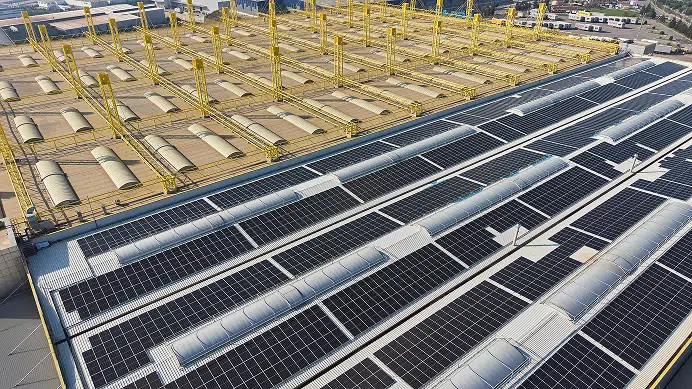
The environmental impact of industrial production has become not only an operational issue but also a strategic responsibility for companies today. In the steel industry—one of the most energy-intensive sectors—reducing carbon footprint is a fundamental requirement for sustainable growth. Sarıtaş approaches this process not as a temporary compliance initiative, but as a long-term transformation strategy.
One of the most effective ways to reduce carbon footprint is integrating renewable energy sources into production processes. In line with this approach, Sarıtaş aims to supply a significant portion of the energy used in production from clean and sustainable sources through its solar power plant (SPP) investments. The use of renewable energy not only lowers carbon emissions, but also contributes to making energy costs more predictable and manageable over the long term.
Beyond energy transition, Sarıtaş also invests in technologies that increase energy efficiency across its production operations. Through digital monitoring systems, energy consumption is tracked in real time, inefficient areas are identified, and continuous improvement is ensured. This approach makes the carbon footprint measurable, reportable, and manageable, enabling a more structured and transparent sustainability strategy.
For Sarıtaş, reducing carbon footprint is not merely an environmental responsibility; it is also a strategic move that strengthens competitiveness. Low-carbon production is increasingly becoming a key selection criterion in international markets, while also serving as a tangible indicator of a forward-looking and sustainable industrial vision.